Key Takeaways
- The right high speed doors depend on traffic frequency, opening dimensions, weather exposure, safety requirements, and the conditions inside the facility.
- Opening and closing speeds, operating cycle ratings, and curtain recovery features should be assessed together to understand daily performance.
- Wind resistance, air permeability, water permeability, and thermal transmittance measure different properties and should be evaluated separately.
- Total ownership cost includes equipment, installation, maintenance, spare parts, repairs, and potential downtime.
Introduction
Industrial facilities need doors that can handle frequent movement without creating unnecessary delays or compromising the working environment. High speed doors are commonly used in warehouses, loading bays, manufacturing plants, and other areas where vehicles or personnel pass through regularly. However, opening speed alone does not determine whether a door is suitable. Dimensions, weather exposure, safety systems, sealing performance, and maintenance requirements all affect the final choice.
This guide explains the main door types, key technical specifications, operating costs, and relevant standards to help you select a suitable solution for your facility.
What Are High Speed Doors and Which Types Suit Industrial Applications?
How Do High Speed Door Systems Differ from Conventional Industrial Doors?
High speed doors are powered systems designed to open and close quickly during frequent passage. A typical installation includes a motor, control panel, operating sensors, and a door curtain or panel. Depending on the design, the system may also include photoelectric sensors, safety edges, and automatic controls.
Compared with conventional industrial doors, high-speed systems can reduce the time an entrance remains open. This is useful in facilities with regular forklift movements, busy loading areas, or separate production zones.
However, fast operation does not automatically mean better insulation or stronger weather protection. A door designed for indoor traffic may not perform well at an exposed exterior entrance. The construction, sealing system, operating limits, and tested performance must match the application.
What Are the Main Types of High Speed Doors?
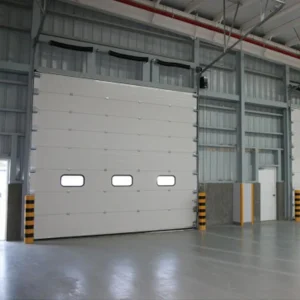
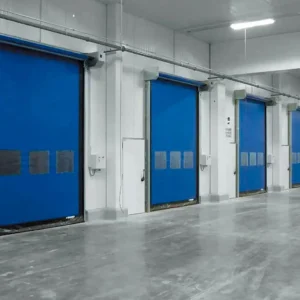
Different door designs serve different operating conditions. The following comparison provides a practical starting point.
| Door type | Typical applications | Main selection considerations |
| Standard fabric doors | Indoor production areas and warehouse partitions | Curtain flexibility, traffic frequency, and maintenance |
| High speed zipper doors | Exterior entrances and exposed transition areas | Curtain retention, weather exposure, and impact recovery |
| Rubber high-speed doors | Demanding industrial environments | Curtain durability, impact conditions, and repair requirements |
| Rigid-panel or spiral doors | Openings requiring greater rigidity or insulation | Panel construction, security, space, and initial cost |
| Cold-storage doors | Temperature-controlled logistics and processing | Thermal separation, sealing, and condensation control |
These categories are not a universal ranking. Actual performance depends on the individual model, its configuration, and the conditions under which it operates.
Which Industrial Applications Benefit Most from High Speed Doors?
- Warehouses and distribution centers: Frequent forklift traffic makes opening speed, sensor response, and cycle capability important.
- Exterior loading bays: Rain and wind exposure increase the importance of curtain retention and weather performance.
- Manufacturing facilities: Doors can separate production areas while supporting movement between workstations.
- Food processing and temperature-controlled areas: Sealing, cleanability, temperature differences, and the required level of environmental separation need careful consideration.
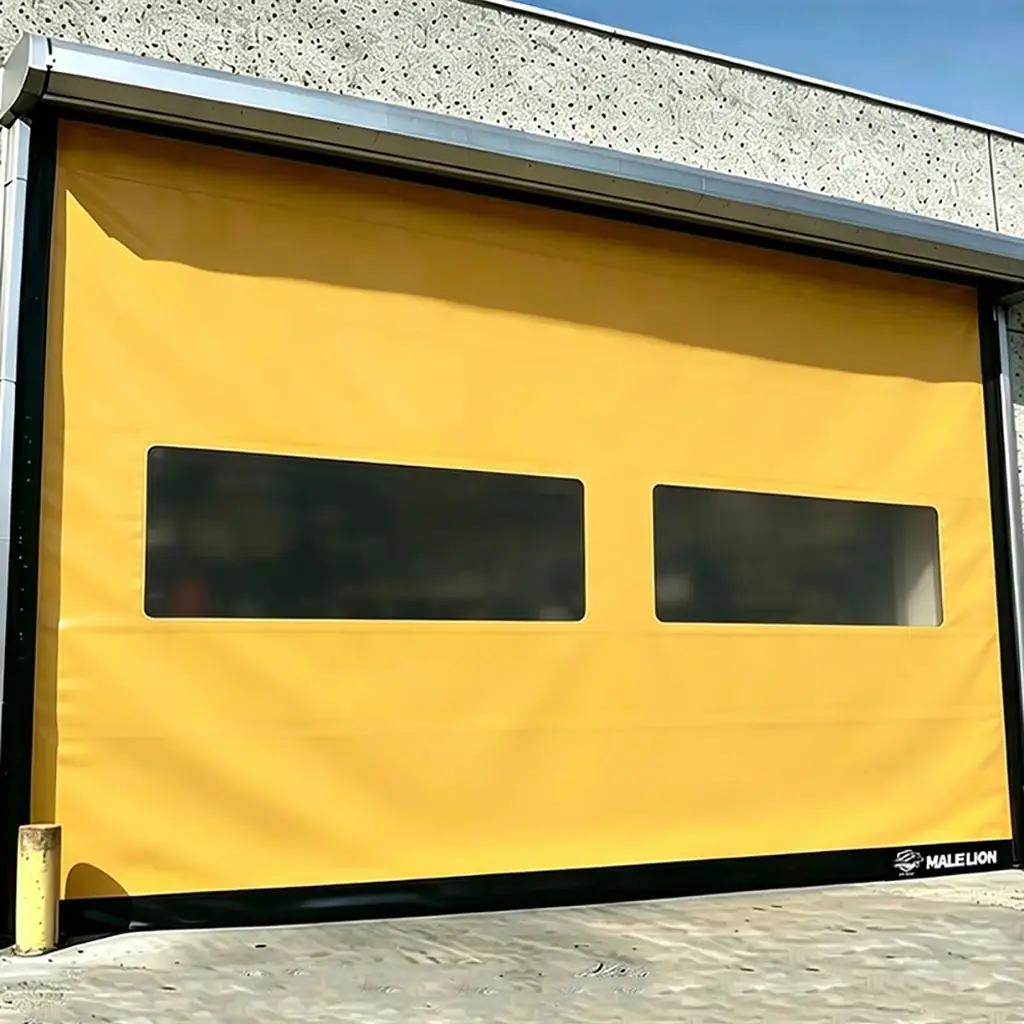
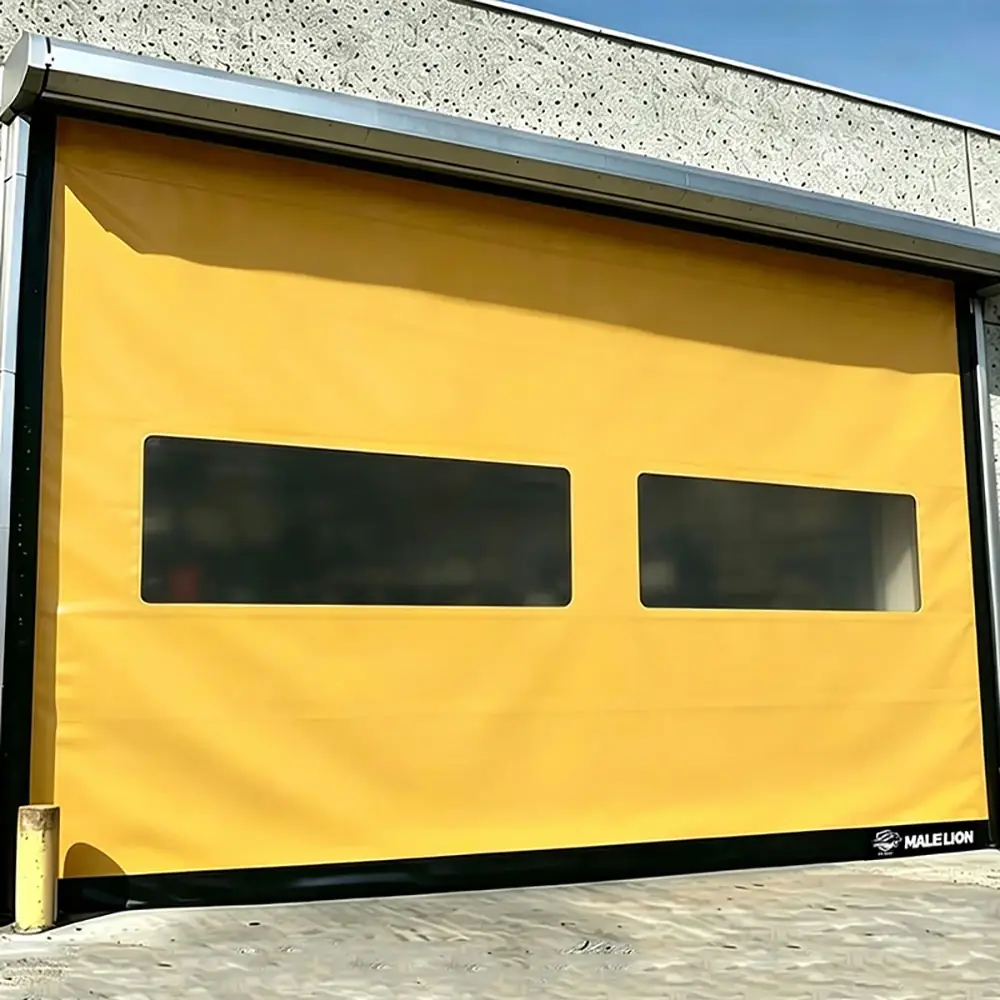
For exterior openings exposed to changing weather, high speed fabric doors with a suitable guide system may offer a practical balance between rapid access and curtain flexibility.
Which Technical Specifications Matter Most When Selecting High Speed Doors?
How Do Opening Speed, Closing Speed, and Cycle Ratings Affect Performance?
Opening speed affects how quickly vehicles can pass through an entrance, while closing speed influences how soon the doorway is closed again. Both matter in busy areas where a door may operate many times throughout the day.
Variable-frequency drives (VFDs) can control motor acceleration and deceleration. Depending on the system, this may help provide smoother movement and reduce mechanical stress. Cycle ratings also deserve attention, but they should be considered alongside maintenance requirements and actual operating conditions.
The Model 010 All-Weather High-Speed Zipper Door has the following stated operating specifications:
- Opening speed: up to 2.0 m/s
- Closing speed: 1.2 m/s
- Drive motor: 1,500 W
- Stated operating durability: 1,000,000 cycles
A million-cycle rating is a useful reference, but it does not guarantee a specific number of years in service. Actual service life depends on traffic volume, installation quality, operating conditions, maintenance, and the basis of the durability assessment.
How Should Wind Resistance and Weather Sealing Be Evaluated?
Wind resistance, air permeability, and water permeability describe different aspects of door performance.
- Wind resistance indicates the door’s ability to withstand specified wind loads under the relevant test conditions.
- Air permeability measures air leakage through the closed door assembly.
- Water permeability evaluates resistance to water penetration under specified test conditions.
The Model 010 has the following stated classifications:
- Class 4 wind resistance at a maximum opening of 5,500 × 5,500 mm.
- Up to Class 6 wind resistance for openings up to 5,000 mm wide × 5,500 mm high, reported as approximately 1,000 N/m².
- Class 3 water permeability.
- Class 1 air permeability.
These ratings must be considered in relation to the tested dimensions and conditions. A classification achieved at one door size should not automatically be applied to every size or installation.
For projects requiring wind resistant doors, the relevant wind-load class should match the site’s exposure and project requirements. Air and water performance should be checked separately rather than inferred from the wind rating.
How Do Curtain Construction and Self-Repairing Technology Affect Reliability?
The Model 010 uses a continuous zipper-guided track system with reinforced guides. Its curtain is designed to reinsert into the guides automatically during a subsequent opening cycle after certain impacts displace it.
This type of mechanism is a key feature of self repairing high speed doors, but the term does not mean that every impact is harmless or that damaged components never need service.
Three characteristics should be distinguished:
- Curtain retention: Keeps the curtain guided during normal operation and relevant loading conditions.
- Impact recovery: Allows a displaced curtain to return to its guide system.
- Impact resistance: Describes how the assembly responds to a particular impact.
Automatic reinsertion can reduce the need for manual curtain realignment after certain incidents. However, the result depends on the door’s design and the nature of the impact. Visible damage, abnormal movement, or repeated disengagement may still require inspection.
Which Safety Devices and Control Interfaces Are Important?
Safety performance depends on the complete installed system, not just the door curtain. The Model 010 configuration includes in-track photoelectric sensors, a wireless soft-bottom safety edge with upward reversal, and an IP55 control enclosure with self-diagnostic functions.
Before installation, the control configuration should be checked against the site’s electrical supply, traffic patterns, and safety requirements. Correct positioning, commissioning, and maintenance are also essential.
The following table summarizes the main Model 010 specifications and their practical meaning.
| Parameter | Stated specification | What it means for the project |
| Maximum clear opening | 5,500 × 5,500 mm | Confirm the required opening and installation space |
| Opening / closing speed | Up to 2.0 / 1.2 m/s | Assess both speeds against traffic patterns |
| Wind resistance | Class 4 at maximum size; up to Class 6 at specified smaller width | Match the rating to the opening dimensions and test conditions |
| Water permeability | Class 3 | Evaluate separately for rain exposure |
| Air permeability | Class 1 | Consider air leakage through the closed door |
| Thermal transmittance | U-value of 6.02 W/m²K | Assess heat transfer through the door assembly |
| Operating durability | 1,000,000 cycles stated | Review the test basis and maintenance conditions |
| Power supply | Single-phase 220 V, 50–60 Hz | Confirm compatibility with the site’s electrical supply |
These specifications should be checked against the current technical documentation for the proposed configuration before a purchase decision is made.
How Do High Speed Doors Affect Energy Efficiency and Total Ownership Cost?
How Does Operating Speed Affect Traffic Flow and Energy Performance?
A fast-opening door can reduce the time an entrance remains open, especially when vehicles pass through frequently. This may help limit unwanted air exchange between indoor and outdoor areas. The actual effect depends on more than opening speed, however.
Important factors include:
- The number of daily openings and the time each door remains open.
- The temperature difference between connected spaces.
- Air leakage through the closed door.
- Heating, ventilation, and air-conditioning (HVAC) operation.
- Traffic control and the time needed for vehicles to pass safely.
The Model 010’s opening speed of up to 2.0 m/s and closing speed of 1.2 m/s may suit applications requiring frequent access. However, energy savings cannot be determined from speed alone.
Its stated U-value of 6.02 W/m²K describes thermal transmittance through the door assembly. It does not measure air exchange when the door is open. These are separate factors and should not be used interchangeably in energy calculations.
What Determines the Total Cost of Ownership?
The initial equipment price is only one part of the overall cost. A useful comparison should include the following categories.
| Cost category | Items to include |
| Equipment | Door dimensions, curtain design, motor, controls, and safety options |
| Installation | Structural preparation, electrical work, mounting, and commissioning |
| Maintenance | Inspections, guide cleaning, sensor checks, and drive-system servicing |
| Repairs and spare parts | Curtain replacement, mechanical components, and service costs |
| Downtime | Potential production interruptions and delays caused by door failure |
| Logistics | Packaging, shipping, delivery arrangements, and handling |
Two quotations may appear similar but cover different components or services. Comparing the same scope of work makes it easier to understand the actual cost difference.
For example, an exterior entrance with significant wind exposure may require a different configuration from an indoor partition. Comparing the equipment prices without considering these requirements can lead to an unsuitable specification.
How Do Cycle Ratings and Maintenance Affect Long-Term Reliability?
Preventive maintenance helps identify problems before they interrupt operations. Inspection intervals should follow the manufacturer’s recommendations and reflect how frequently the door operates.
Routine checks may include:
- Cleaning the guides and checking the zipper or curtain edges.
- Testing photoelectric sensors and safety edges.
- Inspecting the motor, control system, and door movement.
- Checking for unusual noise, wear, or repeated curtain displacement.
- Confirming the availability of replacement parts and service support.
A high cycle rating is valuable, but it does not remove the need for maintenance. The operating environment, installation quality, and repair response all affect long-term reliability.
Which Standards and Supplier Documents Should Be Evaluated Before Purchasing?
Which European Standards Apply to High Speed Doors?
Standards help define product requirements, test methods, and performance classifications. The relevant standard and evidence depend on the product, intended use, market, and applicable regulatory framework.
| Standard | General relevance | Documentation to review |
| EN 13241 | Product standard for industrial, commercial, and garage doors and gates within its scope | Applicable declaration and product documentation |
| EN 12424 | Wind-load classification | Reported class, tested dimensions, and supporting evidence |
| EN 12425 | Water permeability classification | Relevant water-performance results |
| EN 12426 | Air permeability classification | Relevant air-performance results |
| EN 12453 | Safety in use | Applicable safety assessment and test documentation |
| EN 12604 | Mechanical aspects and related safety requirements | Relevant mechanical documentation |
| EN 12444, EN 12489, EN 12427, EN 12445, EN 12605 | Test methods associated with particular characteristics in the referenced documentation | Applicable test reports and editions |
The relevant declaration, test report, edition, and assessment route should be confirmed for the intended market.
What Documentation Should Accompany a High Speed Door Quotation?
A complete technical proposal should make it possible to assess both product suitability and installation requirements. Relevant documents include:
- A datasheet stating dimensions, opening and closing speeds, motor details, and operating limits.
- Applicable declarations, test reports, and performance classifications.
- Installation drawings showing headroom, side clearance, and mounting requirements.
- Electrical specifications, safety-device details, and control interfaces.
- Warranty terms, commissioning instructions, and maintenance guidance.
The documents should describe the configuration being quoted. A test result for a different door size or construction may not establish the performance of the proposed assembly.
How Should a High Speed Door Manufacturer Be Evaluated?
A reliable assessment should consider manufacturing capability, available configurations, documented quality controls, technical support, spare-parts availability, and installation responsibilities.
It is also important to establish who handles installation, commissioning, maintenance, and warranty claims. Clear responsibilities help reduce delays if a problem occurs after the door enters service.
Before requesting a quotation, prepare the following project details:
- Clear opening width and height, installation space, and indoor or outdoor location.
- Traffic type, operating frequency, and required opening speed.
- Wind exposure, rain conditions, temperature range, and environmental separation needs.
- Required safety devices, access controls, and automation interfaces.
- Applicable standards, electrical supply, and required technical documentation.
- Installation, shipping, warranty, maintenance, and spare-parts requirements.
Providing these details makes it easier to assess whether a proposed configuration matches the application and to compare quotations on a consistent basis.
Frequently Asked Questions
What Is the Difference Between High Speed Doors and Standard Industrial Doors?
High speed doors are designed for rapid operation and frequent passage. Standard industrial doors may place greater emphasis on insulation, security, or structural requirements. The right choice depends on traffic frequency, environmental conditions, safety needs, and the required level of separation.
What Wind Resistance Rating Should an Exterior High Speed Door Have?
The required rating depends on site exposure, building design, opening dimensions, and project requirements. For the Model 010, the stated Class 4 rating applies at 5,500 × 5,500 mm, while the reported Class 6 rating applies to openings up to 5,000 mm wide × 5,500 mm high.
How Do Self-Repairing High Speed Doors Work?
Some zipper-guided doors allow the curtain to disengage from its side guides following certain impacts and reinsert during a subsequent opening cycle. This can reduce manual realignment after suitable incidents. The mechanism does not prevent all damage, so abnormal operation or visible wear should still be inspected.
How Much Does an Industrial High Speed Door Cost?
The price depends on opening dimensions, curtain construction, wind-load requirements, motor and controls, safety devices, installation, shipping, and service arrangements. Requesting an itemized quotation helps compare equivalent configurations and understand the total cost of ownership.
Conclusion
Choosing the right high speed doors means matching the door design and technical ratings to actual operating conditions. The Model 010 All-Weather High-Speed Zipper Door offers opening speeds up to 2.0 m/s, automatic curtain reinsertion, and wind resistance ratings for specified opening sizes.
Contact XK Door to discuss your project requirements and request technical specifications and a tailored quotation.